Shaping and Validating a New Loyalty Proposition at Scale
Product Design
UX Strategy
User Research
Information Architecture
Loyalty
Service Design
This project focused on exploring and validating a new loyalty proposition for TUI at a global level. The work was driven by a clear business challenge: customer engagement drops significantly outside of booking and travel periods, and in a market that is heavily competitive on price, TUI needed to offer more than short-term discounts to stand out.
Look out for the TUI Smiles Rewards Club planning to launch in March 2026.

Role
Lead UX/UI Designer
Team
Various, changing stakeholders from across multiple markets within the business as well as multiple external agencies.
Tools
Figma
Axure
Userlytics (User Testing)
Miro
Overview
In 2024, TUI began exploring a new loyalty proposition to address a core business challenge: low engagement outside booking and travel periods, and the need to create long-term value in a highly price competitive market. TUI needed confidence that any loyalty approach would deliver real value, be trusted by customers, and scale across its global ecosystem.
I led early UX discovery and validation work that shaped the direction of what would become the TUI Smiles Rewards Club - testing pricing concepts, opt-in journeys, proposition clarity, and service communications to reduce risk ahead of full-scale delivery.
About TUI
TUI is a global curated-leisure company serving millions of customers across web and app platforms, supporting complex journeys from booking through to travel and post-trip communications.
Problem
TUI did not yet have a clear loyalty model that worked across its digital ecosystem. Early thinking leaned towards tactical incentives, but there was uncertainty around whether these would actually influence behaviour or improve long-term engagement.
From a customer point of view, there was a risk that loyalty would feel confusing, low value, or purely transactional. Internally, different teams had different ideas of what loyalty should be, and there was no shared view on whether it should focus on discounts, rewards, or something more relationship-driven.
Key challenges included:
Low engagement outside booking and travel periods
Heavy price competition limiting the impact of small discounts
Uncertainty around what customers would actually value
The need to design something that could scale globally
My Role & Scope
I acted as the UX lead for early loyalty exploration and validation.
I owned the experience design for:
Membership pricing concepts
Early loyalty concepts and journeys
Opt-in flows
The loyalty proposition page
Supporting email and service communications
The final loyalty proposition was later defined by TUI’s Head of Loyalty and her team. The loyalty hub and interactive games are being delivered by EPAM, based on early concept work and user-tested insights I led in collaboration with Kokoro.
This work involved all TUI markets, with particularly close collaboration between the UK team and TUI HQ in Germany. The proposition is global, with rollout planned in phases.
What Should Loyalty Mean to TUI?
Early exploration of personalised deals and membership pricing
At the start of the project, there was no shared understanding of what a TUI loyalty scheme should look like.
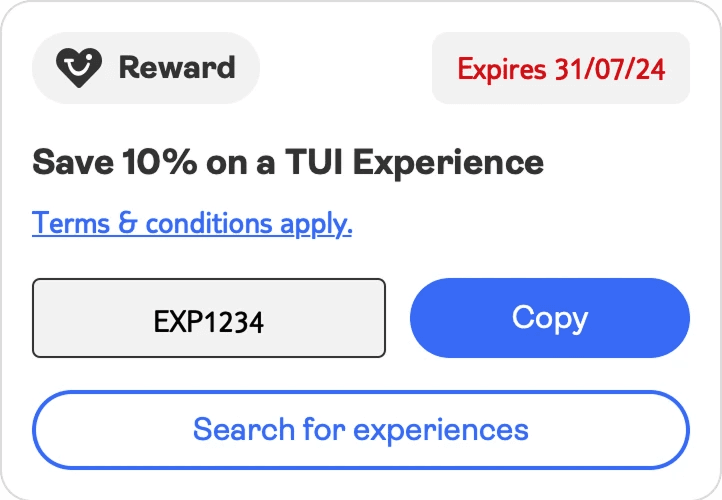
One of the first concepts explored was a “Rewards Wallet”. This surfaced personalised and segmented deals using copy-and-paste codes, shown to customers at different points in their journey. While this approach worked as a short-term incentive, it quickly became clear that it lacked a sense of progression or emotional investment.

We then explored membership pricing models similar to Tesco Clubcard or AO. These were tested to understand whether simply having an account-linked discount would influence booking decisions.
User testing showed that small discounts alone were unlikely to change behaviour unless TUI was already the cheapest option. This made it clear that a loyalty scheme based purely on pricing would struggle to deliver long-term value.
Reframing the loyalty approach
Based on this insight, I presented an alternative vision to stakeholders that reframed loyalty as an ongoing relationship rather than a simple reward mechanic.
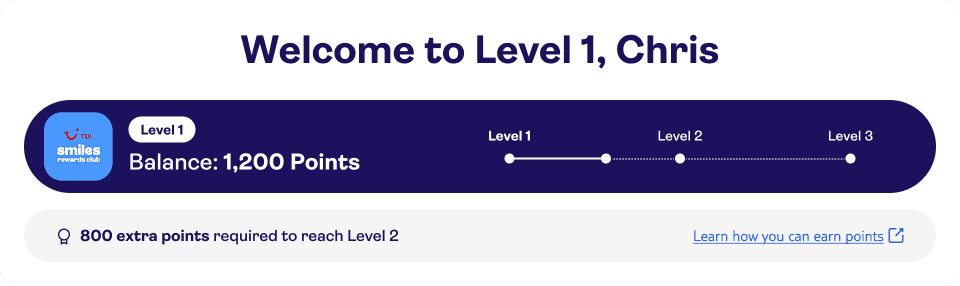
Instead of focusing only on spend, I proposed a milestone-based approach where customers could earn points for actions that were valuable to both the customer and the business. This included things like:
Signing up to newsletters
Completing surveys
Checking in online
Writing reviews

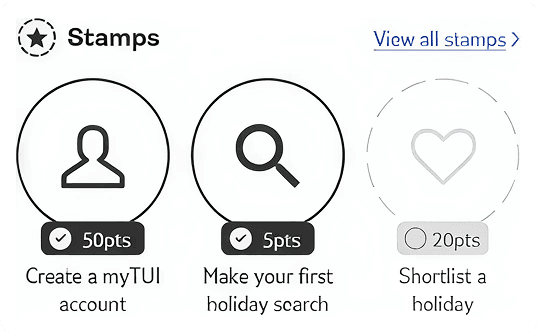
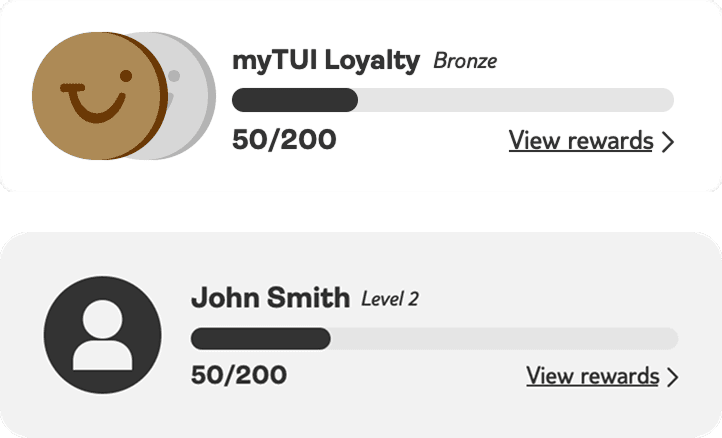
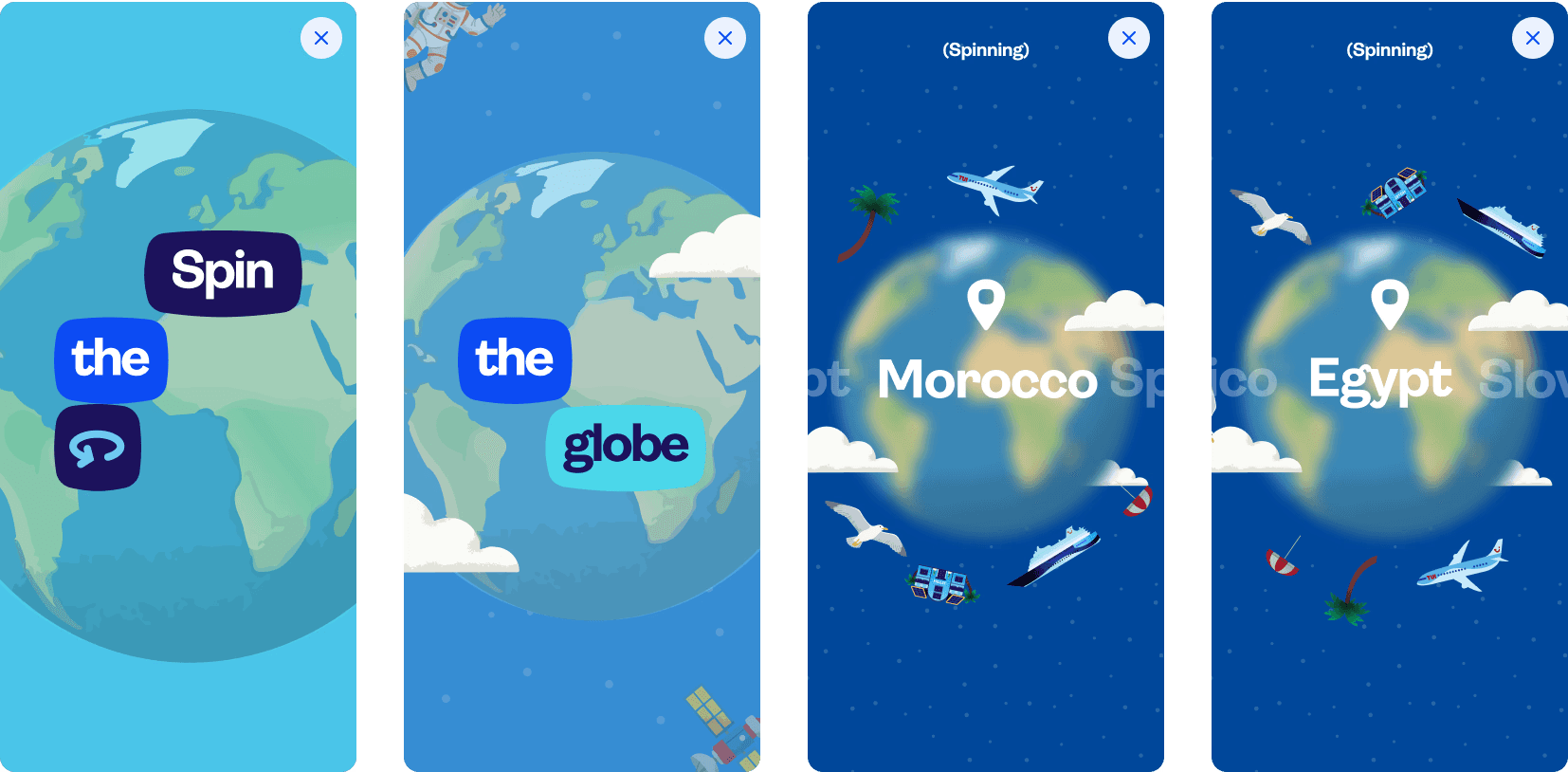
The idea was to reward engagement, not just transactions. Customers would progress through tiers, unlocking benefits as they moved up and creating a clearer sense of momentum and status. Elements of gamification were introduced to support engagement outside booking periods.
While the final proposition continued to evolve under the loyalty team, many of these themes informed the broader direction of the programme.
Validating the Loyalty Proposition
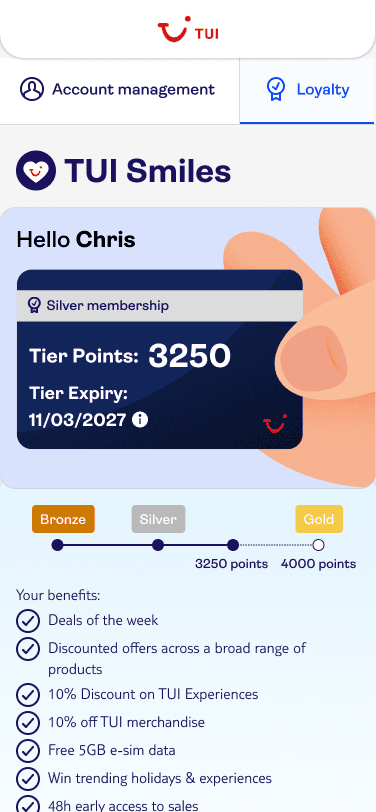
Once the loyalty team at TUI had come up with a full proposition, I came up with a quick design concept that was translated for multiple markets and could be used to validate the proposition value.
To validate the proposition direction, concept testing was carried out with Kukoro across multiple markets including the UK, Germany, the Netherlands, Belgium, France, and Sweden.
The goal was not to finalise visual design, but to ensure customers could quickly answer:
What is this?
Why should I join?
What do I get in return?
The feedback showed that customers generally understood and valued the proposition. However, one clear insight stood out: third-party partner benefits were consistently seen as more valuable than TUI-specific discounts.
For example, three months of free Disney+ was perceived as offering more value than a percentage discount on TUI experiences or early access to sales. This insight influenced how benefits were prioritised and how value was communicated in later proposition designs.
Designing the Loyalty Opt-in Experience
The opt-in flow became one of the most critical areas of focus, as it combined legal consent, customer trust, and commercial incentives.
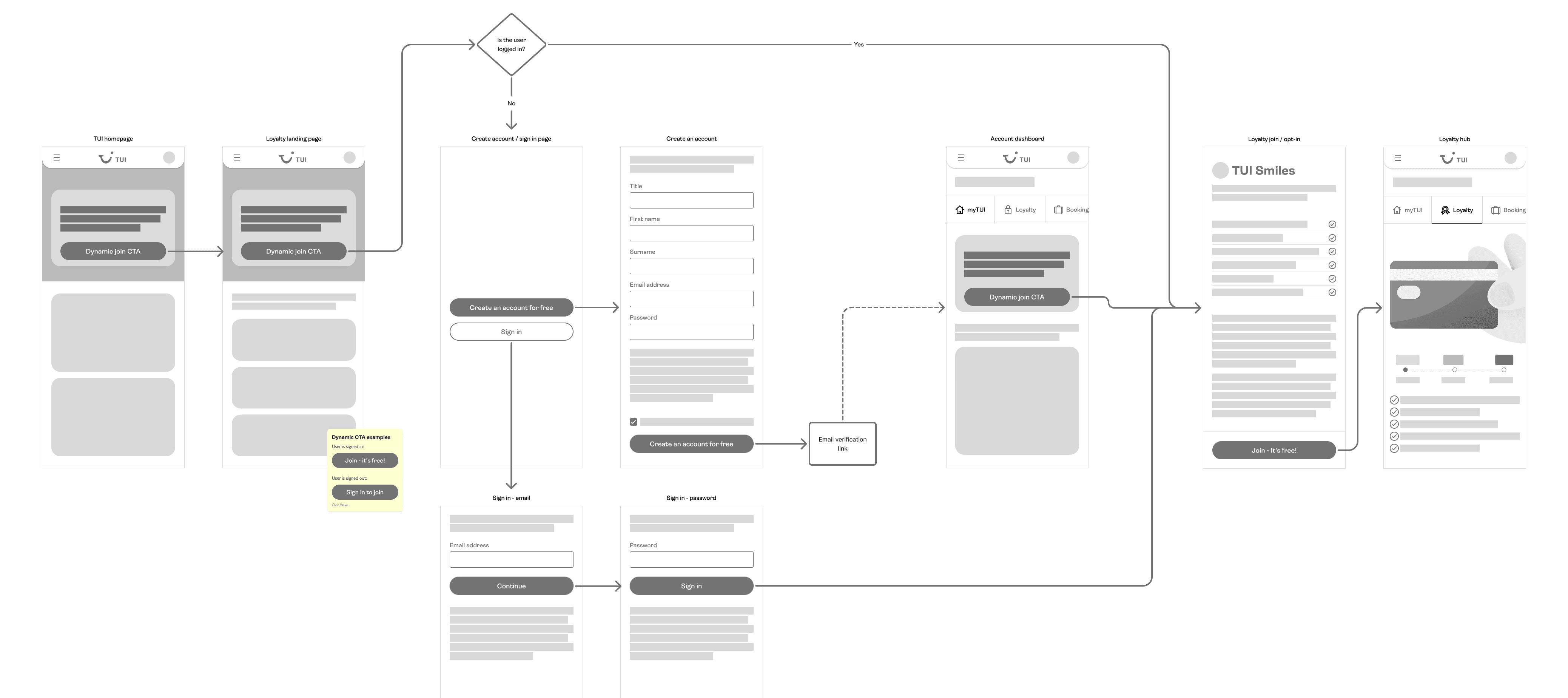
When designing the opt-in flows, I deliberately avoided unnecessary friction. One early idea would have taken users from the proposition page to a sign-in or registration screen, then returned them back to the proposition page to join. I rejected this approach as it added extra steps with no real benefit.
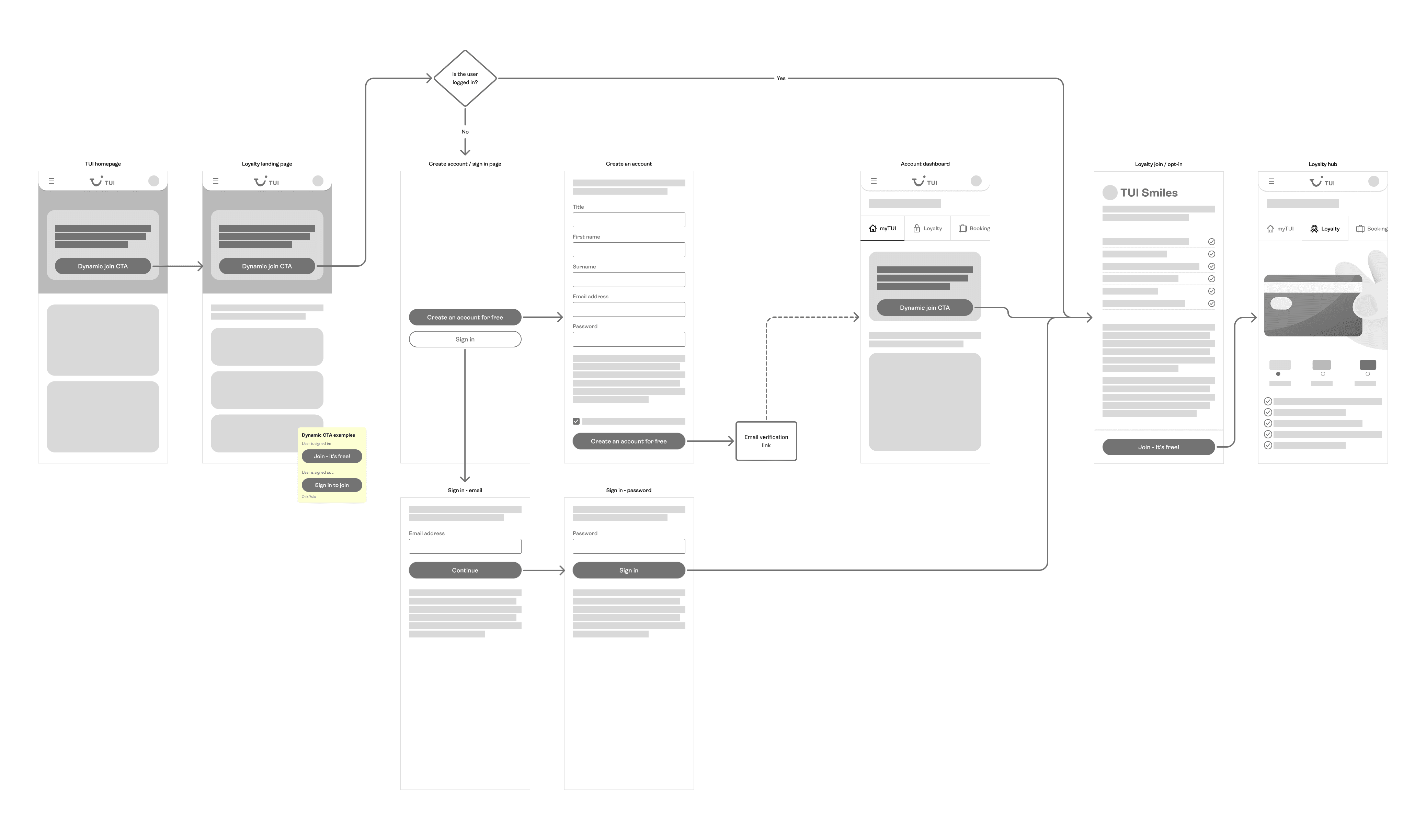
Instead, I proposed dynamic CTAs:
For logged-out users, CTAs prompted them to sign in or create an account
For logged-in users, CTAs took them directly into the loyalty experience
This reduced friction and made the journey feel more direct and intentional.
Qualitative insights from the user testing of this flow, showed:
Users expected loyalty to be included automatically when creating an account
Separate opt-in steps created confusion and felt unnecessary
Customers wanted reassurance that opting out later would not negatively affect their booking
Clear confirmation after joining was essential to build trust
Based on this, I concluded that the final designs should prioritise:
Transparent consent without dark patterns
Clear explanation of what users were agreeing to
Reassurance messaging after enrolment
Consistent behaviour across account creation and sign-in journeys
This work defined a foundation that balanced regulatory requirements with user expectations which EPAM used to create the UI screens for the final opt-in flow.
Designing the Loyalty Proposition Page
Explaining points and rewards
As the loyalty proposition matured, I owned the final design of the loyalty proposition landing page, which will be the entry point for customers discovering TUI Smiles.
One of the more complex challenges was explaining how customers could earn points across a wide range of products .
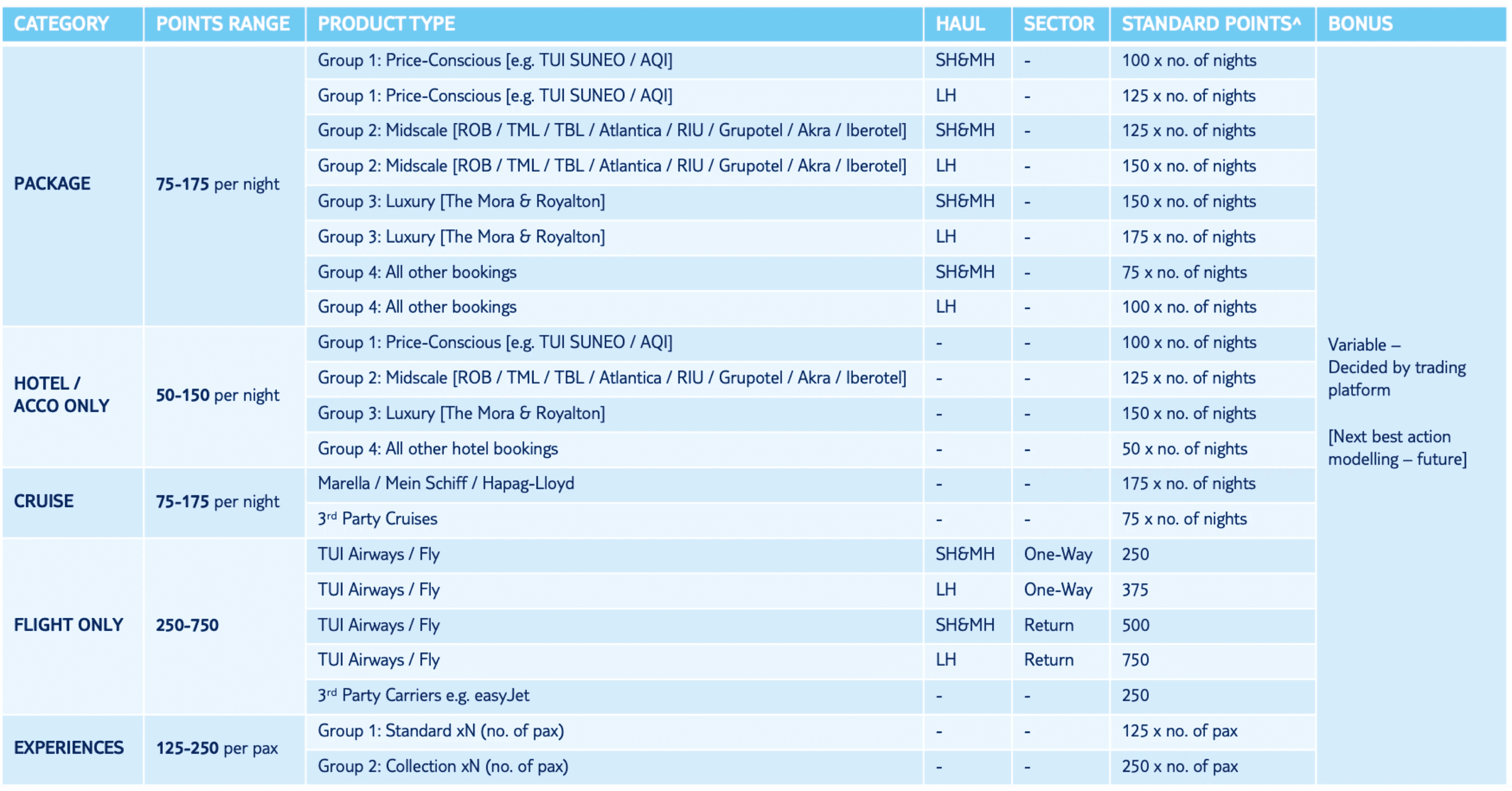
Some stakeholders wanted to include a full table showing every product variation and how many points could be earned. While this offered transparency, it was hard to scan, relied heavily on internal language, and did not translate well to mobile.
To address this, I designed a layered approach that balanced clarity with flexibility.
The final solution included:
A full points breakdown table for customers who wanted complete transparency
A mobile-friendly collapsible accordion, allowing users to explore categories one at a time
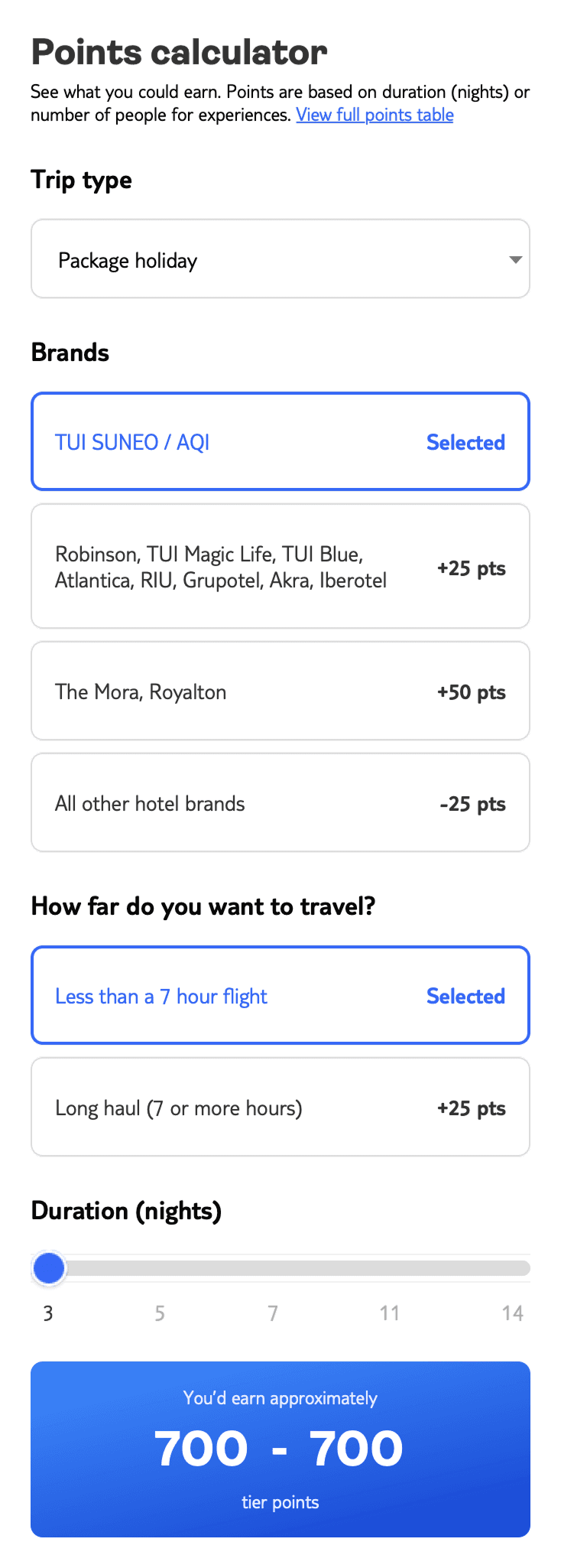
An interactive points calculator, enabling customers to quickly understand how their purchases would translate into rewards
The interactive calculator proved especially effective in turning abstract point values into something tangible and motivating, helping customers answer the question: “What does this actually mean for me?”
There was also concern that removing the table would make it harder for users to see how close they were to reaching the next tier by upgrading their booking. To address this, I added comparative information showing points differences for one-step upgrades. This was inspired by patterns commonly used in ecommerce, such as Apple’s product comparisons.
Final points calculator
Service Design: Loyalty Communications
Loyalty is not just about screens. It is a service made up of ongoing communications that shape how customers feel about the brand over time.
Alongside the core experience, I explored how loyalty-related emails could support the wider journey. This included thinking about tone, timing, and how messages could reinforce value without feeling like noise. The aim was to ensure loyalty communications felt joined-up with the digital experience and helped build trust rather than overwhelm users.
I mapped loyalty-triggered communications against the wider customer journey, aligning service, marketing, and campaign touchpoints.

This resulted in a clear prioritisation:
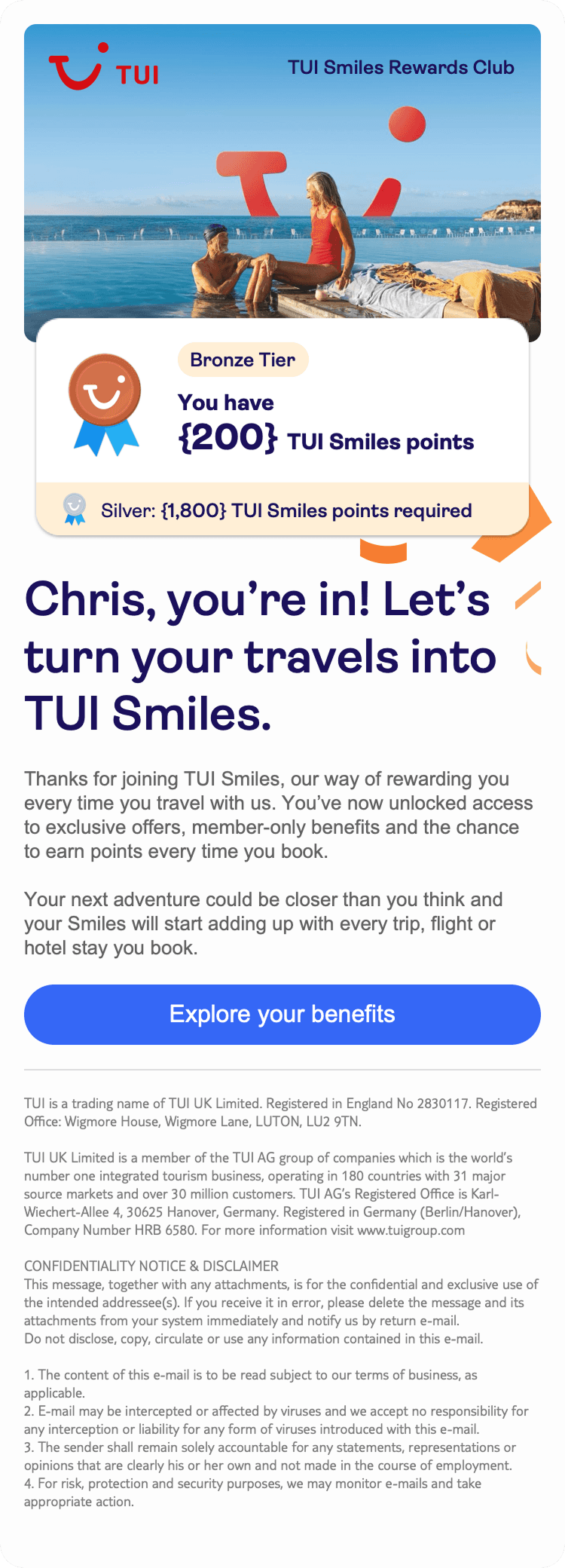
Launch-critical communications, such as enrolment confirmation, tier movement, loyalty opt-out and cancelled bookings.
Secondary lifecycle messages, including anniversary rewards, partner offers, and win-back activity, planned for later phases
This approach ensured loyalty communications supported the experience rather than competing with it.
Validating expectations through user testing
To validate these assumptions, I ran user testing using a card-sorting-inspired approach to understand expectations around email timing and content.
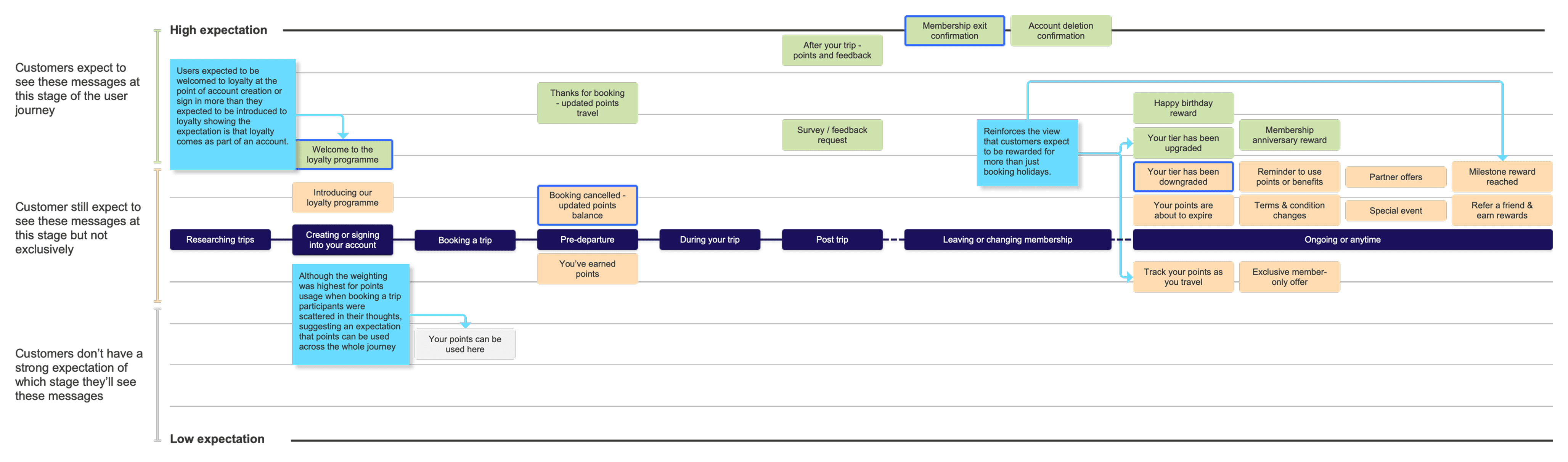
This revealed that:
Customers strongly expected confirmation and reassurance immediately after joining
Points-related messages were seen as most valuable when closely tied to bookings or travel milestones
Promotional or celebratory messages were better received once trust in the programme had been established
Poorly timed emails risked being perceived as marketing noise rather than loyalty benefits
These insights reinforced the decision to keep the launch set focused and service-led, while designing the system to scale as loyalty matured.
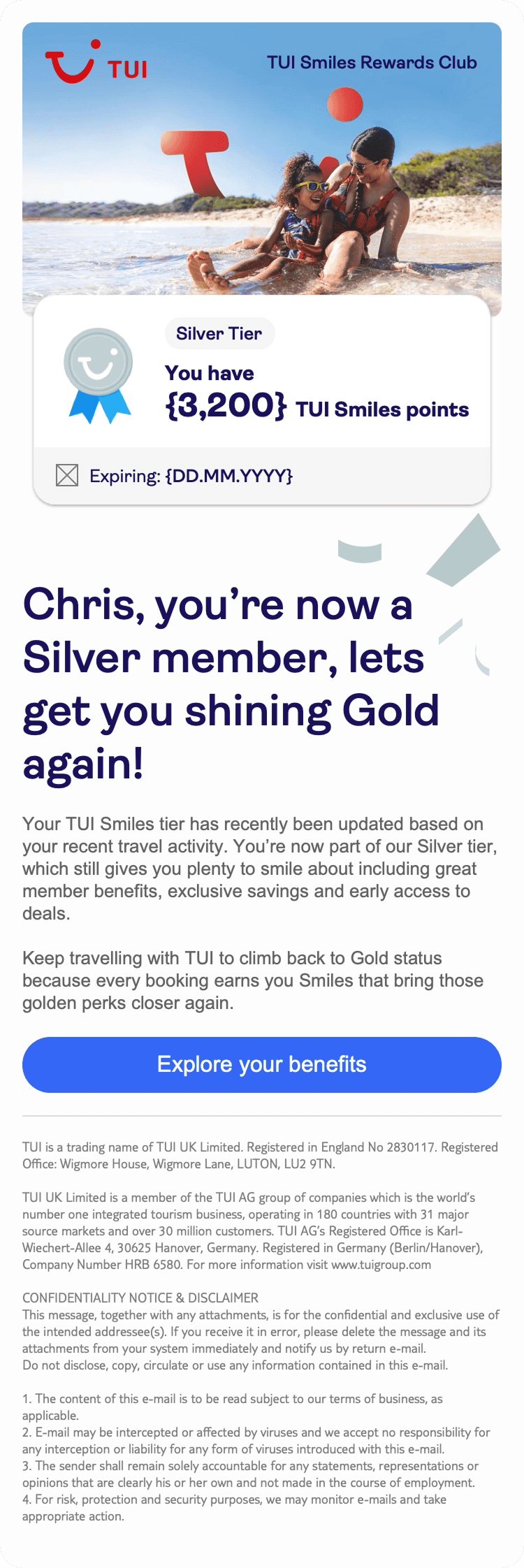
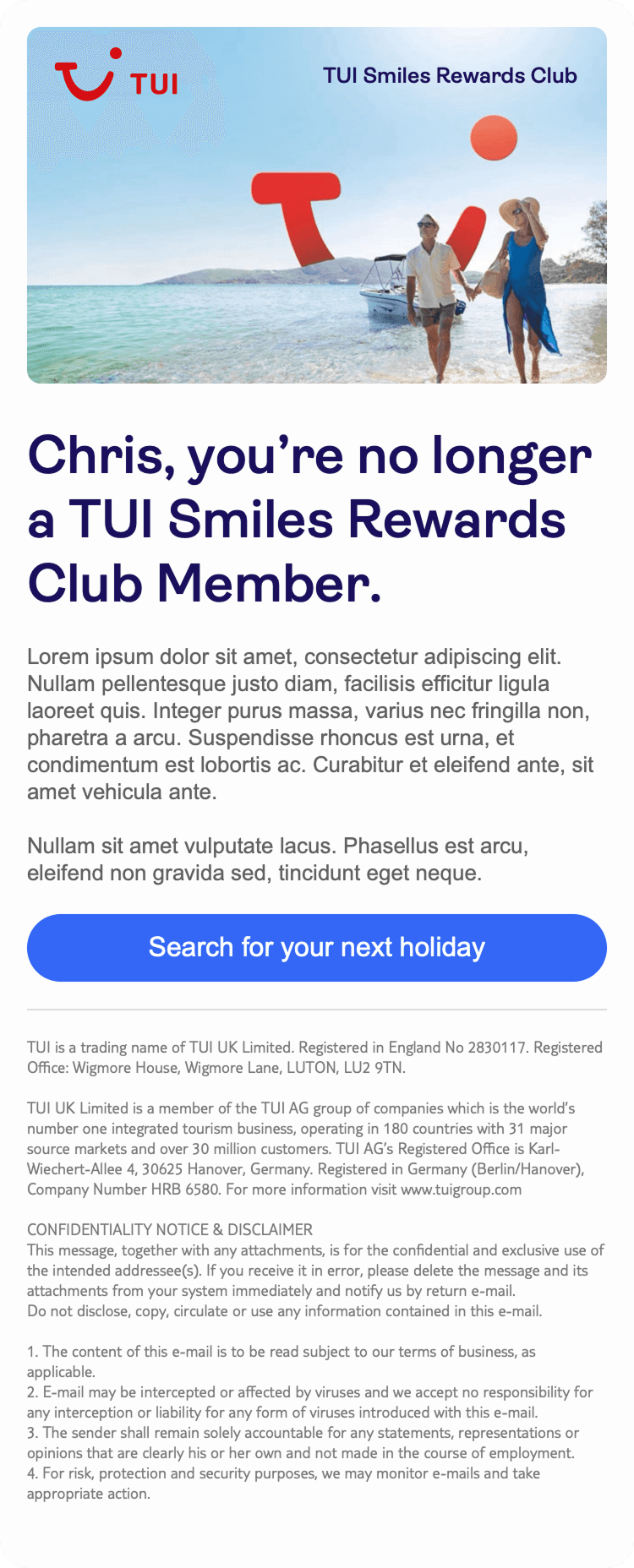
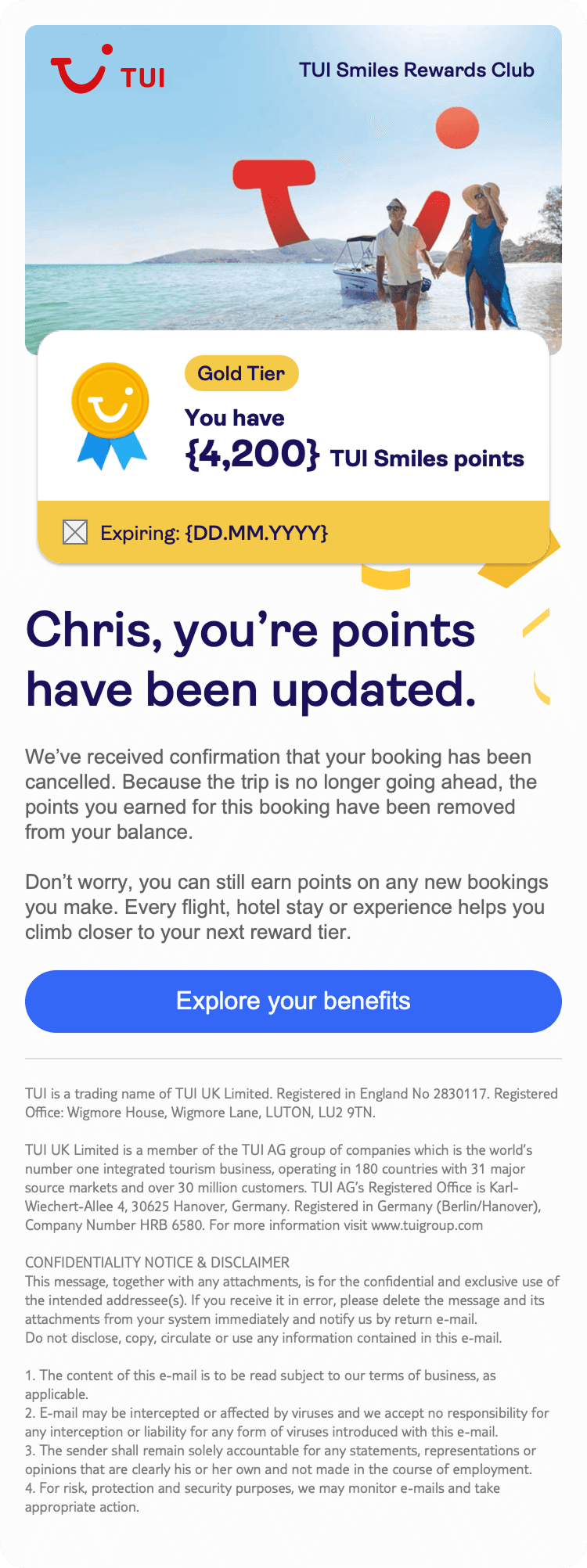
Designing the loyalty service emails
The final step was translating the loyalty strategy and lifecycle decisions into clear, consistent service communications.
By grounding these designs in earlier lifecycle mapping and user expectation testing, the emails acted as a continuation of the product experience rather than standalone messages — helping loyalty feel coherent across every touchpoint.
Reflections
This project reinforced the importance of:
Designing for trust in commercially sensitive experiences
Validating assumptions early, before committing to scale
Influencing outcomes without owning final delivery
Treating loyalty as a service ecosystem, not just a feature
Working within a large, multi-agency environment strengthened my ability to operate in ambiguity, collaborate across disciplines, and focus on impact over output.
Below is a sneak peak of some of the final designs that will go live on the back of this work.